Set Social Media Goals That Actually Guide Your Content
Turn a broad social media ambition into a measurable goal that shapes what you publish and review.
“Grow the account” is a destination without directions. A useful goal names the audience, the action you hope to earn, and the time window for learning. It gives the creator a reason to choose one format over another.
Write a goal that changes the brief
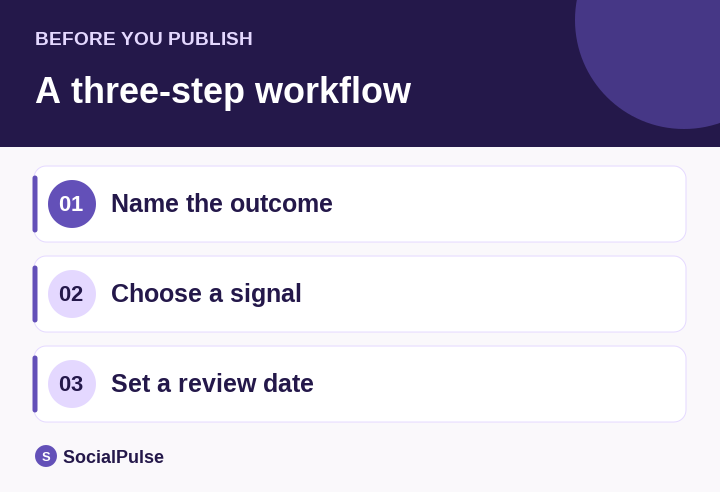
Start with an outcome, a date, and a source of evidence. Ask what your team would do differently under that goal. A metric that never changes the brief is usually a reporting number.
Worked example
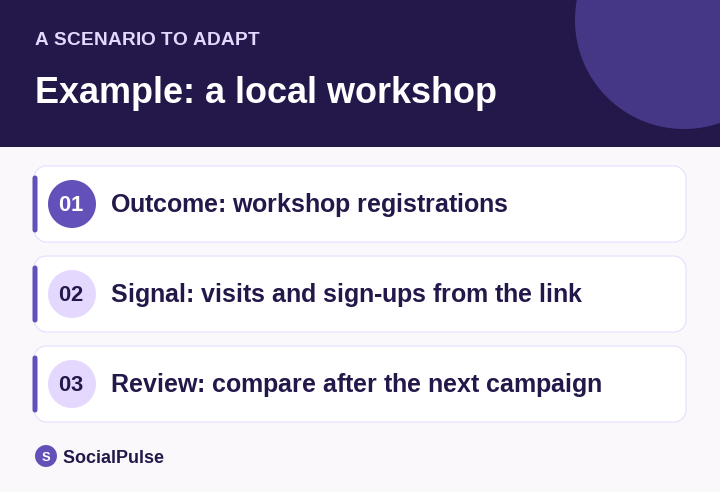
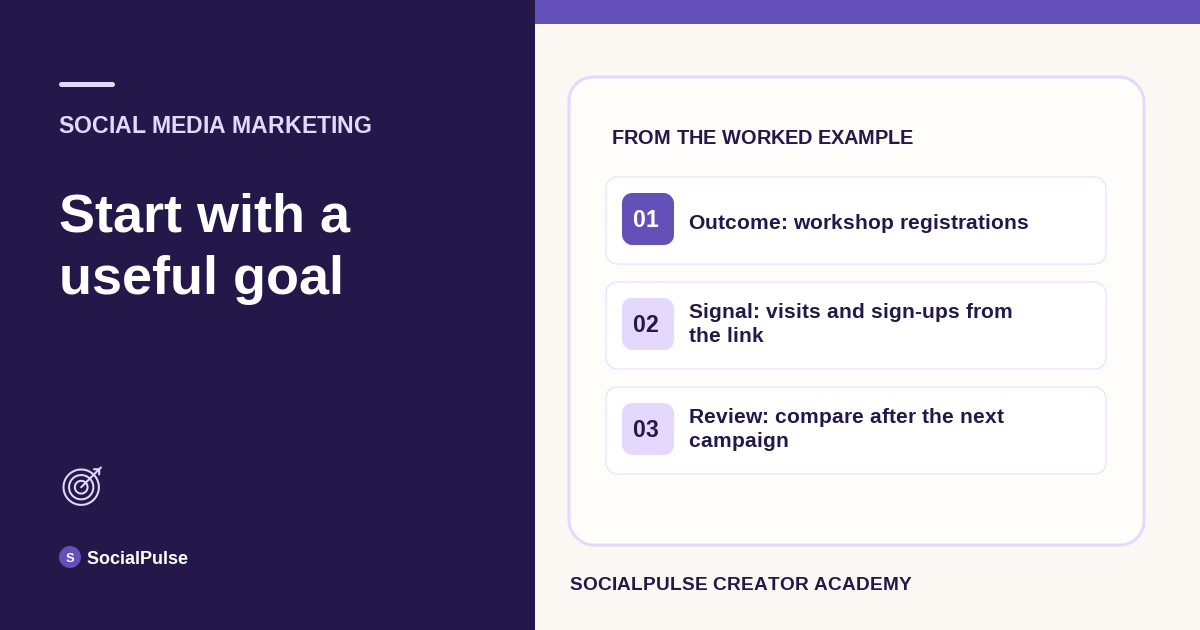
A workshop needs registrations by Friday. Create a demo of one thing attendees will learn, link to a tagged registration page, and report completed sign-ups alongside visits. A share is useful context for reach.
What to do with the result
If visits rise and sign-ups do not, inspect the registration page and check the link on a phone. If visits are low, test the call to action in the next post.
Separate outcomes from activity
Publishing five posts is an activity; earning more qualified profile visits is an outcome. Both can be tracked, but they answer different questions. Set a controllable activity goal alongside an audience outcome so you can learn even when outside factors affect results.
Choose a metric that fits the goal
If the goal is awareness, examine reach and relevant discovery. If the goal is community, look for substantive replies or returning participants. If the goal is a sale or signup, track visits and completed actions with a privacy-conscious measurement setup. Avoid treating follower count as a universal measure of success.
Give the goal a review date
Choose a period long enough to publish and learn from several pieces of work. At review time, keep what appears to help, revise the weak parts, and record what remains uncertain. A goal is a planning tool; it should be updated when the business or audience changes.
A working guide for your next session
Choose an outcome you can observe
A useful social goal describes a change you hope to support, not just activity you can count. “Publish four posts” is a production target; “help more first-time customers understand how the service works” is an audience outcome. You may use both, but keep them distinct. Define the action or response that would suggest progress, the time window, and where the information comes from. If the outcome depends on actions outside social platforms, make sure your website or intake process can measure it responsibly.
Map content to the decision it supports
Different posts can help at different moments. A quick explanation may introduce a subject; a comparison may help someone evaluate options; a customer question may reveal what remains unclear. Make a simple map of audience questions and the content that answers each one. This prevents a calendar from becoming a collection of unrelated promotions. It also gives you a useful test: before publishing, ask what the intended viewer should understand or do after seeing the post.
Use a small measurement set
Pick a few indicators that match the goal, and document their definitions so comparisons stay consistent. Reach, saves, visits, replies, clicks, and completed actions answer different questions. Keep an eye on effort as well: if one format takes several hours, note the production time alongside its outcomes. Do not infer sales or customer intent from likes alone. Use aggregate reporting where possible, respect consent, and avoid collecting personal details that are not necessary for the decision.
Run a review that leads to a decision
Schedule a review after a complete campaign or publishing cycle. Record what you expected, what happened, what surprised you, and the next adjustment. If the numbers are mixed, inspect the path from post to action: was the audience right, was the message clear, and did the destination fulfill the promise? Preserve the useful parts and change one weak point at a time. A review is successful when it informs a practical next step, even if the result was not a rise in every metric.