Measure a Social Campaign Beyond Likes
Build a campaign review around the audience action you wanted, not a single engagement number.
Likes can indicate a quick positive response, but they rarely explain whether a campaign accomplished its purpose. Begin the review by writing down what the campaign was meant to change for the audience or the business.
Trace the drop from post to action
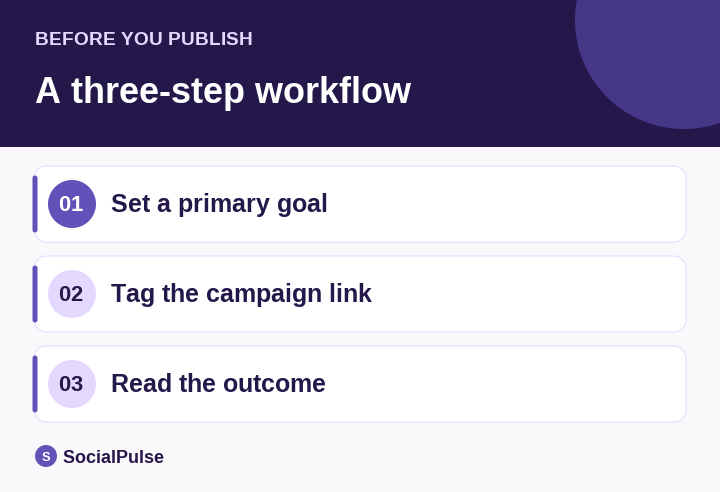
Choose one campaign action and tag links consistently. Use the same campaign name for the same promotion and a different content tag for each post. Before launch, visit the link on a phone and complete the path through the landing page.
Worked example
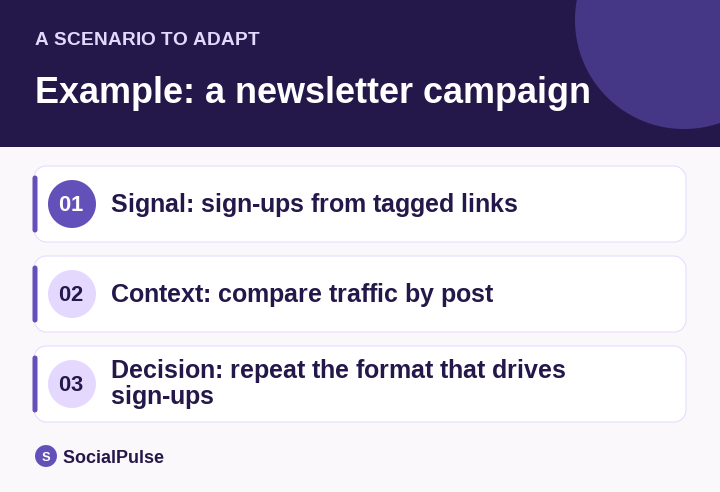
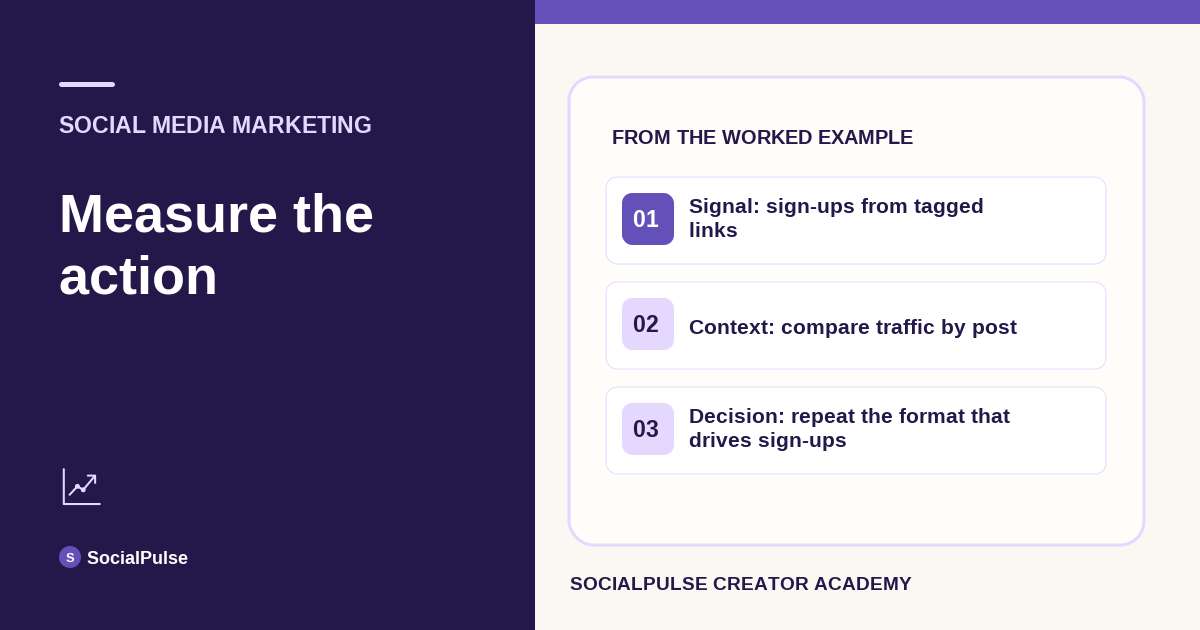
Example: one format drives 150 tagged sessions and six sign-ups, a 4% session-to-sign-up rate. Another drives 40 sessions and four sign-ups, a 10% rate. Compare both volume and rate, and note that cross-device and privacy controls can hide some attribution.
What to do with the result
Investigate the high-traffic low-conversion path. If the CTA promised a checklist but the landing page leads with a subscription, fix the mismatch before increasing reach.
Map the path to the outcome
List the steps between seeing a post and taking the desired action. A campaign for a new guide may need discovery, a click, and a completed download. Use tracking that respects privacy and avoid collecting more personal information than the task requires.
Compare the right signals
Reach can help describe exposure; saves and shares can indicate practical value; clicks and conversions can show movement toward an action. Compare each signal with the platform, creative, and audience segment involved. Avoid blending results from different channels without acknowledging their different contexts.
Write a review that changes the next campaign
Record what was expected, what happened, and what you would change. If many people saw the post but few clicked, the call to action may be unclear or the destination may not match the promise. If responses were useful but modest, the content may deserve more distribution rather than a full rewrite.
A working guide for your next session
Map the audience path
Write the steps from seeing a post to taking the action that matters: learning more, visiting a resource, signing up, or contacting your team. Decide which steps you can measure responsibly and where the handoff happens. This prevents you from attributing a later action to a post without evidence and shows where a clearer link or explanation may help.
Choose measures that match each step
Reach can describe exposure, saves and shares can signal different kinds of interest, and clicks or completed actions can show movement to a destination. Use the definitions provided by each platform and keep reporting windows consistent. Do not treat likes as a substitute for outcomes that were never measured. When data is incomplete, state the gap clearly.
Read results with context and limits
Compare campaigns that had similar audiences, offers, and time periods. Note changes in creative, budget, season, and destination experience. A difference in results is useful to investigate but does not automatically show which single change caused it. Summarize what you know, what you do not, and the next test you can run without overstating the conclusion.