Research Your Social Media Audience Without Guessing
Use conversations, customer questions, and platform data to understand what your audience needs from your content.
Audience research does not require a complicated survey. Creators can learn a great deal by listening consistently and recording the exact questions people ask before they follow, buy, or recommend a piece of work.
Capture the words people use when they get stuck
Collect ten questions from replies, customer conversations, or public comments. Record the wording, context, and what the person already tried. Remove identifying information from the worksheet.
Worked example
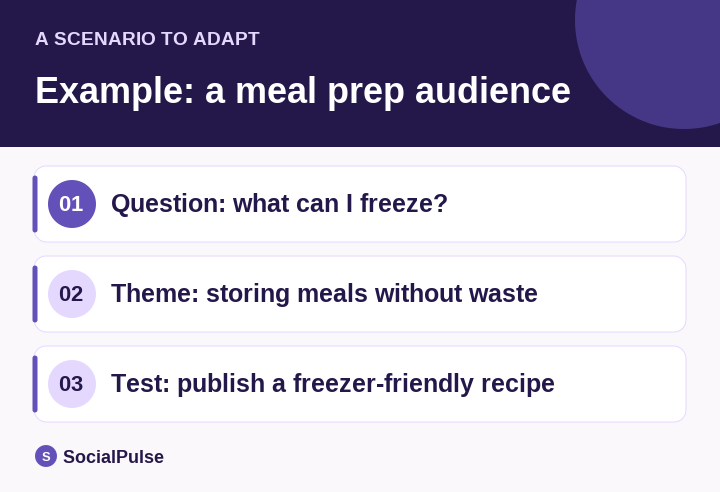
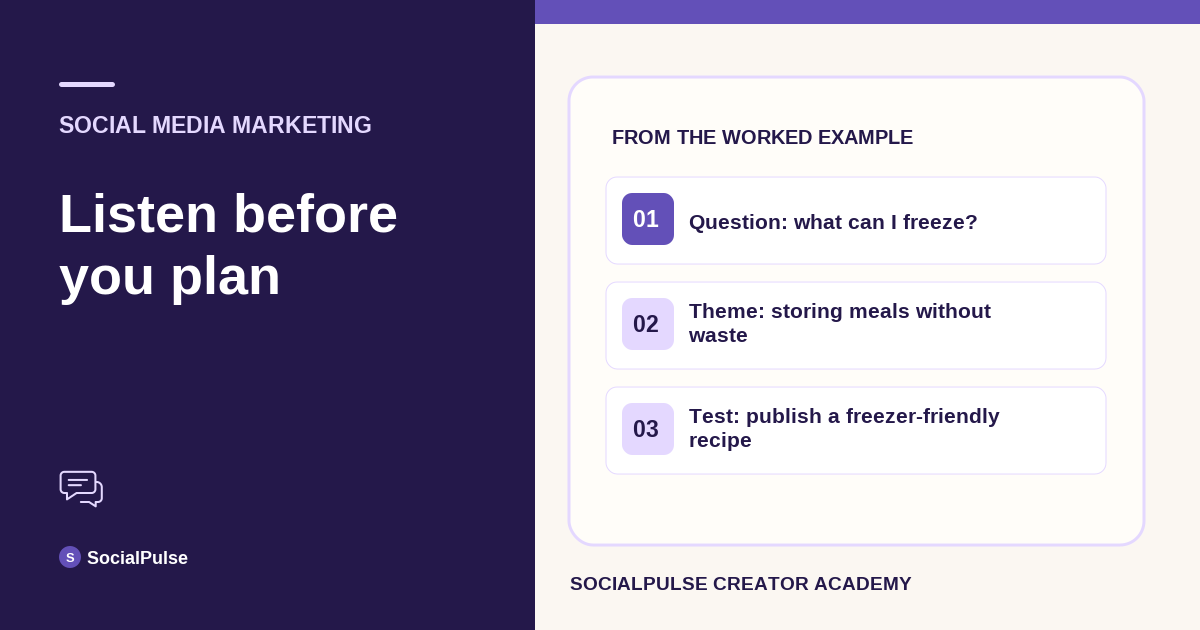
Three freezer-meal questions are really about texture after reheating. “What can I freeze?” is broad. “How to reheat rice without drying it out” is a lesson with a result you can show.
What to do with the result
Make one post for a repeated question and ask what part still feels hard. Repeated wording across independent conversations is more informative than one loud comment.
Collect language from real conversations
Review comments, support questions, community threads, and sales calls where you have permission to use the information. Record the words people use, not just your interpretation of them. Remove personal details and group repeated questions into themes.
Look for the job behind the question
“Which camera should I buy?” may really mean “How can I make my first videos look clear on a limited budget?” The underlying problem helps you create an answer that remains useful even when products change. Ask what decision the person needs to make after watching.
Validate before building a campaign
Test the theme with a post, a conversation, or a small content series. Watch for specific replies and follow-up questions. A poll can help people choose between options, but it should not be treated as proof of demand by itself. Combine quick feedback with what people actually do.
A working guide for your next session
Collect questions from real interactions
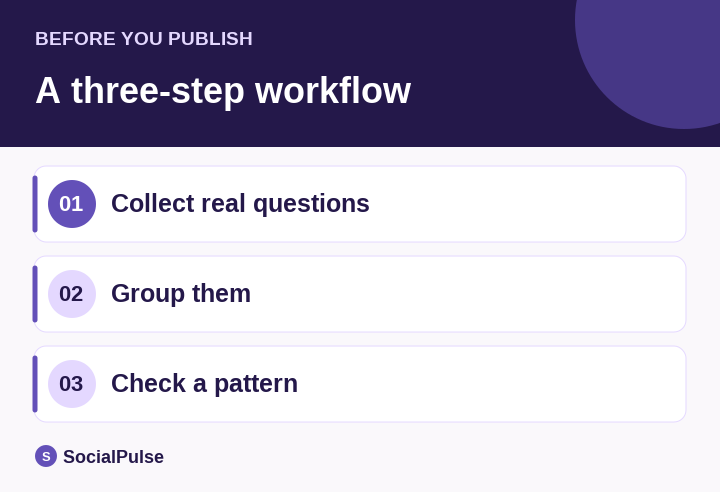
Review comments, messages, customer conversations, search terms, and questions people ask before choosing a product or learning a skill. Capture the wording without identifying people. Group similar questions and note when they appear. This gives you a grounded idea list, while keeping an open mind about whether the sample represents your broader audience.
Separate observation from assumption
A few loud comments do not define every follower. Label what you saw, what you inferred, and what you still need to learn. Ask a focused question when more context would change your plan. Avoid inferring sensitive traits or targeting people based on private information. Ethical research protects trust and makes the conclusions more reliable.
Use research to improve one content decision
Pick a repeated obstacle and create a response that helps someone take a next step. Track whether viewers understand the explanation, ask a follow-up, or use the resource. If the response is quiet, that does not automatically mean the problem was unimportant; the format or distribution may have missed the audience. Keep refining the question and the way you answer it.