Research Search Phrases for Social Content Without Keyword Stuffing
Turn real search language into better creator topics, titles, and explanations without writing for a machine.
Keyword research is most useful as audience research. It can reveal how people describe a problem, but it cannot tell you whether you have a meaningful answer. Use the phrases as clues, then build content around the real need behind them.
Use search phrases to choose the demonstration
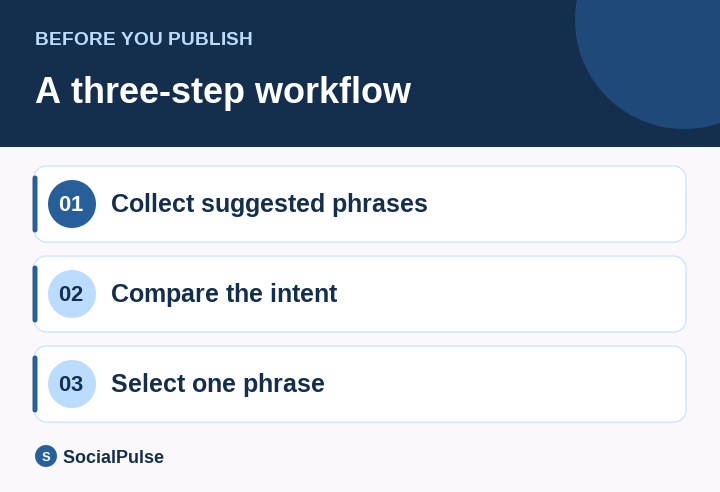
Collect ten phrases that a viewer might type from search suggestions, your own analytics where available, and real questions. Classify each by intent: learn a technique, compare options, or fix a problem. Group phrases only when the same answer would satisfy them.
Worked example
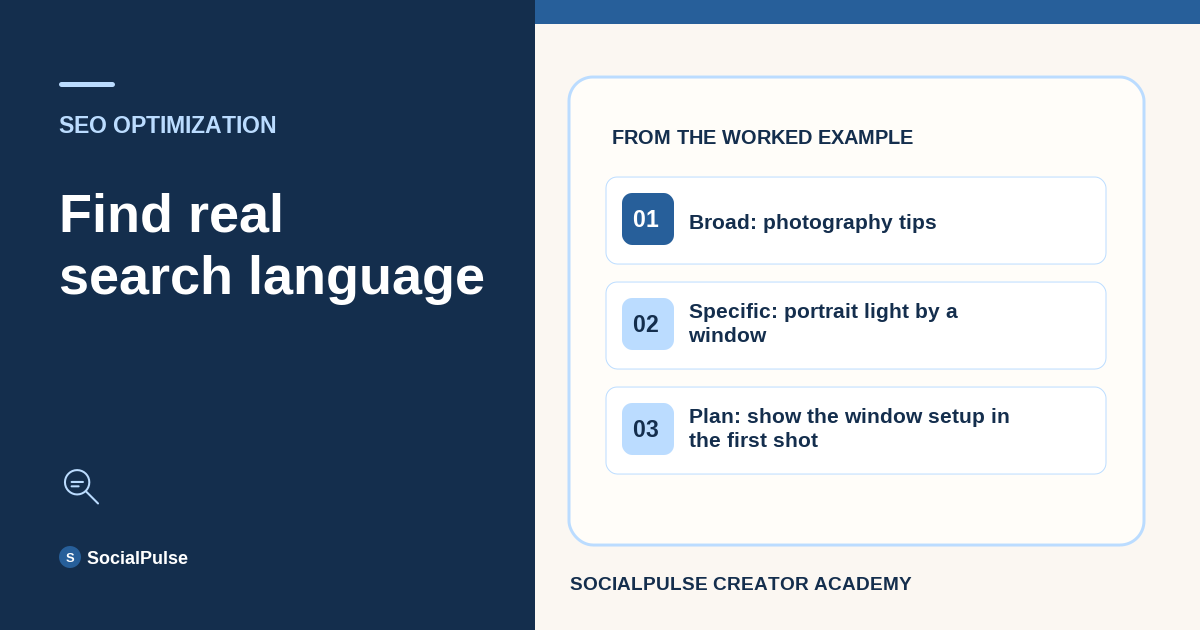
“Portrait lighting” could mean a gear overview or a tutorial. “Window light for a portrait in a small room” asks for a specific setup. Film the position of the window, subject, and camera. Use the precise phrase in a natural title and put the result in the first frame.
What to do with the result
Check whether the finished post answers the question on its own. If a phrase would attract someone expecting a purchase recommendation, create a separate comparison. Treat search suggestions as clues about phrasing. They do not give you reliable search volume.
Collect questions from multiple places
Review platform search suggestions, comments, community discussions, and customer conversations. Keep a record of the phrasing and the context. Search suggestions can be influenced by location and timing, so treat them as evidence to investigate rather than a complete view of demand.
Group questions by intent
Separate learning, comparison, troubleshooting, and purchase questions. A person seeking “how to record better audio” needs a practical guide; someone comparing microphones needs criteria and trade-offs. The same topic can support different pages when the audience’s task genuinely differs.
Write for a complete answer
Use the phrase naturally in the title or opening if it fits, then explain the answer with examples. Cover important limits and follow-up questions. If the page is not useful without repeated keywords, improve the substance before changing the wording.
A working guide for your next session
Gather language from the audience
Collect phrases from questions, comments, support requests, and platform search suggestions. Note the exact wording and the problem behind it. Search suggestions are clues, not a reliable measure of demand on their own. Check whether people use the phrase to seek a tutorial, comparison, review, or inspiration; the intent should shape the resource you create.
Choose a topic you can answer well
Select a question that fits your experience and that you can address with useful details. If a topic requires expertise you do not have, interview a qualified source or choose a narrower question. Avoid creating many pages or videos that differ only by a keyword. A focused, complete answer is easier for a viewer to trust and easier for you to update.
Use keywords naturally and review outcomes
Include the topic in a clear title and explain it naturally in the resource. Organize related points with helpful headings or chapters. After publishing, review actual search terms and audience response when data is available. If people arrive with a different need than the resource answers, revise the content or title to reduce the mismatch instead of adding more phrases.
