Make Creator Content Easier to Find in Search
Help people and search engines understand a creator page by giving it one clear topic, useful wording, and crawlable links.
Search visibility begins with being understandable. A page needs to tell a person what it covers, who it helps, and where the next useful answer is. Adding keywords cannot compensate for a page that does not solve the searcher’s problem.
Align one page with one question
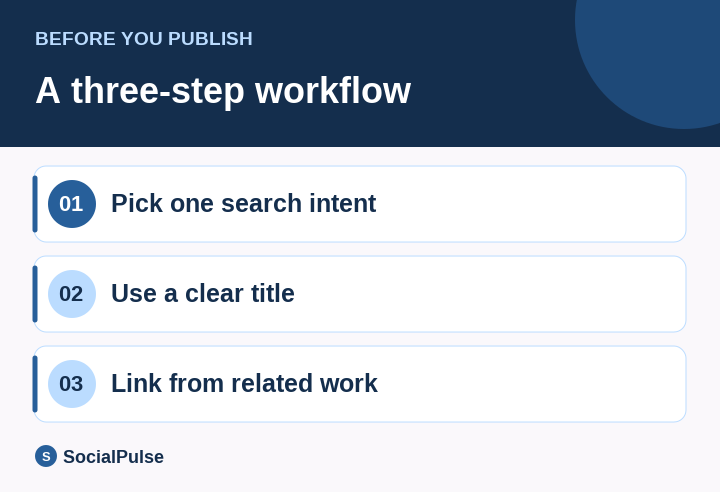
Choose a page you already publish and write the question it fully answers. Check that the browser title, visible heading, first paragraph, and link text from another page describe the same job in plain language.
Worked example
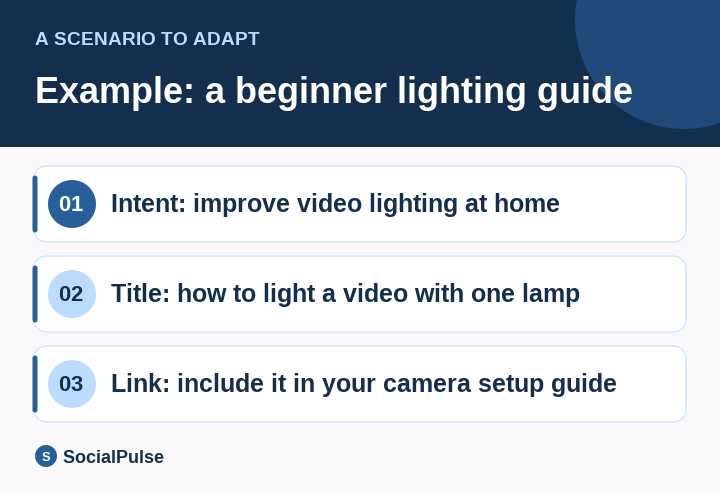
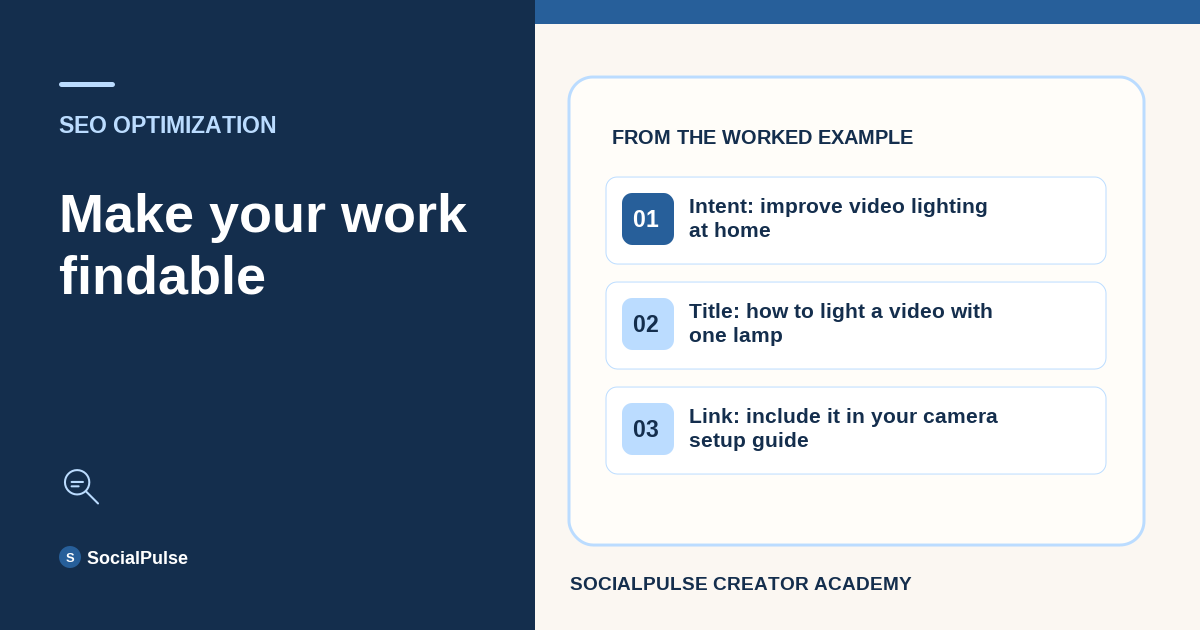
A page titled “My setup” becomes “How to light a video with one lamp.” The first paragraph names the result and the equipment. A related camera guide links with the words “one-lamp video lighting” so readers know what they will open.
What to do with the result
Search Console can help a verified site owner compare impressions and clicks over time. Check that the page is reachable and indexable first. Review queries after a meaningful period, then improve any page whose incoming queries consistently expect a different answer.
Use the words your audience uses
Listen for the phrases people use when asking for help and compare them with the language in your draft. Put the main topic naturally in the title and heading, then explain the idea in your own words. Do not repeat a phrase in every paragraph simply to signal relevance.
Create a page that stands on its own
A useful article answers a distinct question with examples, limitations, and next steps. Link to related material only when it helps the reader continue. Google recommends people-first information with original value rather than pages produced mainly to manipulate rankings.
Make pages discoverable and trustworthy
Use clear internal links, descriptive page titles, and a working sitemap. Identify the source of measurements and disclose when figures are estimates. Check the page on mobile and remove claims that cannot be verified. These basics support discovery and help a reader decide whether to trust the advice.
A working guide for your next session
Match the page to a real question
Start with the phrase a person might use when trying to solve a specific problem, then confirm that your page answers it fully. Search behavior varies by platform and changes over time, so use suggestions and your own audience questions as research rather than treating a keyword tool as proof of demand. Choose one clear topic for a page or video. If two questions require different explanations, give them separate destinations and link between them where the connection is useful.
Put the useful answer where people can find it
Use a title that says what the resource helps with, then organize the explanation with descriptive headings. Introduce the answer early and include the context a beginner needs to use it safely. Add an example, a limitation, or a common mistake when it genuinely helps. On a video platform, say the subject naturally and make the description useful to someone deciding whether to watch. Avoid repeating the same phrase unnaturally; clarity is more helpful than keyword density.
Make the resource accessible and trustworthy
Use readable text, captions or transcripts when appropriate, descriptive image text, and working links. Name the creator or organization responsibly, distinguish personal experience from verified guidance, and link to primary platform documentation when explaining changing features. Check that the page works on a phone and does not hide key information behind intrusive elements. Accessibility and trust help real people use the resource and make its purpose clearer to search systems.
Refresh based on evidence, not anxiety
Use search performance, viewer questions, and changes in the product to decide when a resource needs attention. A falling impression count can have several causes, so inspect the query, page, seasonality, and competing formats before rewriting everything. Update details that are genuinely out of date, preserve useful sections, and note the revision date. Avoid publishing near-duplicate pages just to target tiny keyword variations; one thorough resource is often easier to maintain and more useful to a reader.