Use YouTube Shorts as Part of a Wider Channel Strategy
Give Shorts a clear role in your channel instead of treating them as a disconnected source of views.
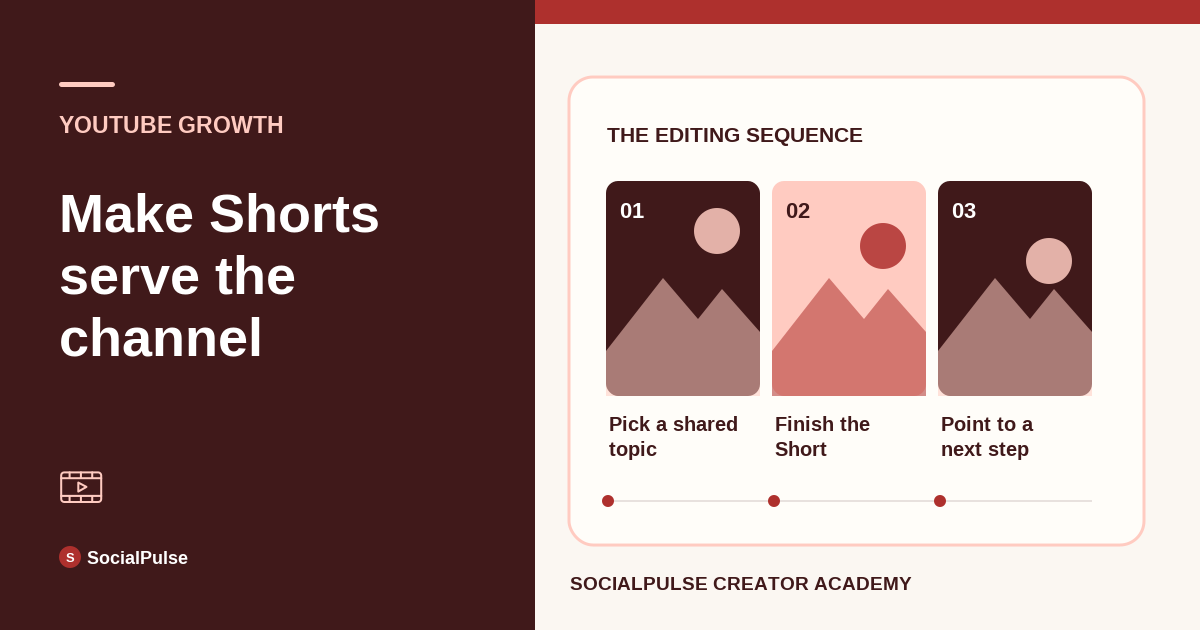
Shorts can introduce an idea quickly, but they work best when their audience and subject connect to the creator’s wider body of work. A short clip does not need to become a trailer; it can deliver a complete small idea on its own.
Give the Short a complete answer and a next lesson
Choose a practical step from a long video that makes sense by itself. Rewrite the start for a viewer who has never seen the channel. Add context at the point it matters, then deliver the result inside the Short.
Worked example
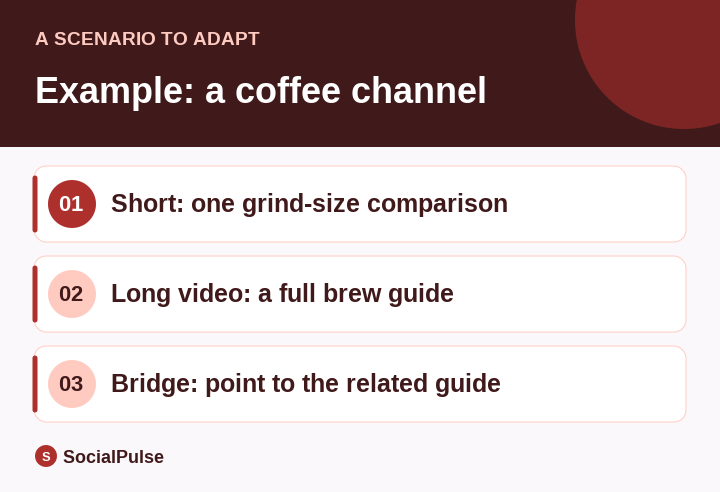
A longer coffee guide covers five brewing variables. The Short tests just grind size, shows the two cups, and points to the full brew guide for viewers who want temperature and timing too.
What to do with the result
Look at whether viewers ask about the next step. If they only ask what the clip means, improve the Short’s opening before building another bridge to long-form content.
Choose a role for each Short
A Short might demonstrate one step, correct a common misconception, or give a quick example from a longer topic. State its role before editing so the clip has a clear beginning and end. If the Short is only a chopped segment, add enough context to make it understandable by itself.
Create a natural next step
When a longer video expands on the same idea, point viewers to it with a clear reason to continue. Do not imply that every Short needs a funnel. Sometimes the best next step is a related playlist, a question in the comments, or simply a complete, useful moment.
Review audiences and outcomes together
Compare which Shorts attract viewers who also watch related uploads or return to the channel. The view count alone cannot tell you whether the clip introduced the right topic. If the audience differs, consider whether the format should become its own creative lane.
A working guide for your next session
Decide how a Short connects to the channel
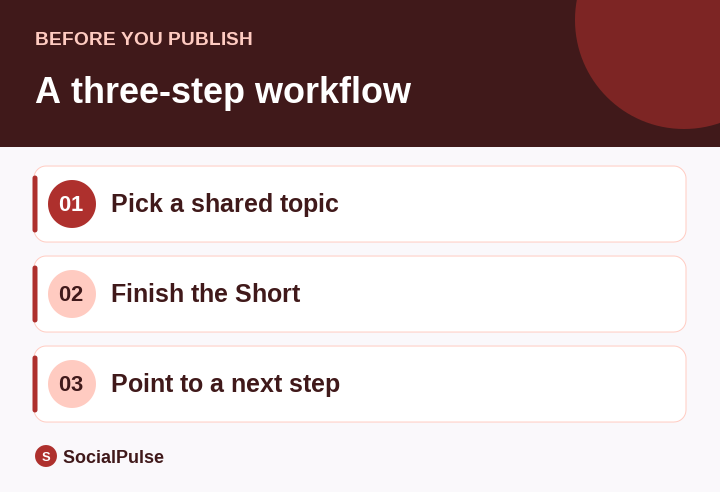
A Short can introduce one useful idea, point to a recurring series, or stand alone as entertainment. Choose its purpose before editing. If it is meant to lead viewers to a longer video, make the connection clear and ensure the long video answers the next question. Avoid relying on a vague “watch more” invitation when the audience has no reason to continue.
Adapt the idea to vertical viewing
Choose a single takeaway, keep the subject visible, and check that captions and graphics are readable on a phone. Reframe important action instead of simply cropping a horizontal video if the crop hides context. A short version should feel complete in its own format; removing the setup and payoff from a long video can make a clip confusing.
Evaluate the two formats for their own jobs
A Short and a long video may reach people differently and invite different viewing habits. Review each format with relevant measures and audience response rather than comparing raw views as if they meant the same thing. If the same topic works in both, plan the formats together while giving each a distinct reason to exist.