Use Instagram Stories to Build Real Creator–Audience Connection
Use Stories as a conversation space: invite useful responses, share process, and follow up on what your audience says.

Stories can make a creator feel approachable, but a sequence of disconnected updates rarely creates a conversation. Think of them as a short exchange: offer context, invite a response, and return with what you learned.
Turn one reply into a useful follow-up
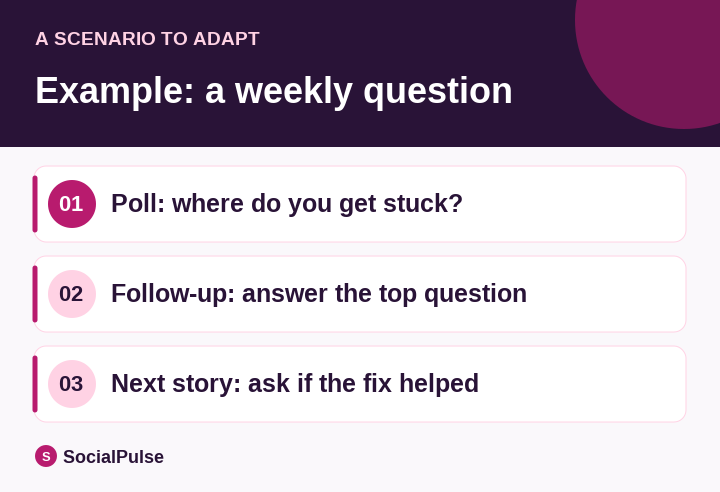
Ask a narrow question with two recognizable answers. Instead of “What content do you want?”, ask “Which slows down your edits: picking shots or cutting audio?” Save the tally and group replies by the exact phrase people used.
Worked example
If seven people mention audio gaps, make a short demonstration that includes the original cut and the cleaned cut. Ask whether the problem was easier after trying the edit.
What to do with the result
Look for specific follow-up replies and questions. If the poll was popular but the demo prompted no response, narrow the lesson to one action. Ask before sharing a viewer’s identifiable reply.
Share the part that helps people understand your work
A quick behind-the-scenes moment can explain why a finished post matters. Show a decision, a draft, or a small lesson—not every private moment. The point is not to manufacture intimacy; it is to make your process legible to people who care about the topic.
Ask questions people can answer easily
A focused prompt works better than “ask me anything” when your audience is still learning how to participate. Offer two useful choices, ask about a specific obstacle, or invite people to share their experience. Avoid asking for personal data you do not need.
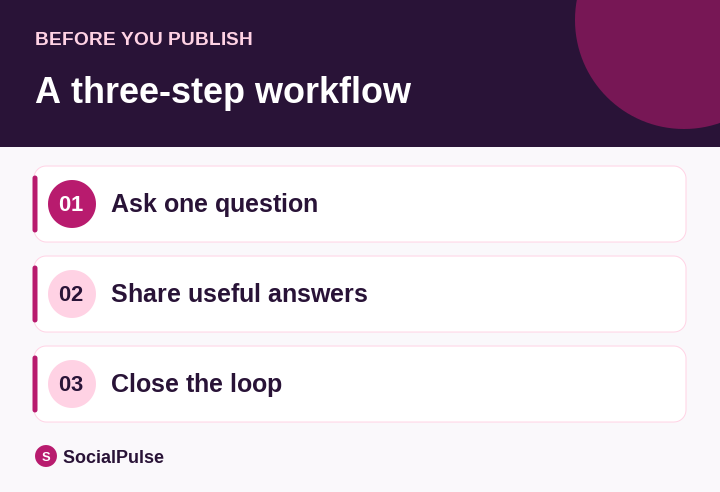
Close the loop
When you receive thoughtful replies, summarize the themes later and explain what you will do with them. If several people ask the same question, turn the answer into a post and credit contributors only with their permission. This shows that participation has a purpose beyond engagement numbers.
A working guide for your next session
Shape a short sequence with a beginning and end
Start by giving enough context for a person who missed earlier updates. Share the process, question, or decision that matters, then invite a specific response. Close with what you learned or what happens next. A sequence with a clear purpose is easier to follow than a run of unrelated frames, and it does not require sharing private details to feel personal.
Ask questions that respect people’s time
A focused prompt gives someone a clear way to reply: choose between two options, name one obstacle, or share a small preference. Make participation optional and do not request sensitive details in a public space. If the answer needs more explanation than a story allows, direct people to a safer and more suitable channel instead of trying to collect everything in a poll.
Use replies to make something more useful
Look for themes rather than treating each reply as a score. Share an anonymized summary, answer a repeated question, or create a post that addresses the issue people raised. Ask permission before quoting or identifying anyone. Closing the loop shows that the exchange shaped your work and helps the next conversation begin with more useful context.