Choose an Instagram Posting Rhythm Without Burning Out
Find a realistic publishing cadence by balancing production time, audience expectations, and the quality you can sustain.
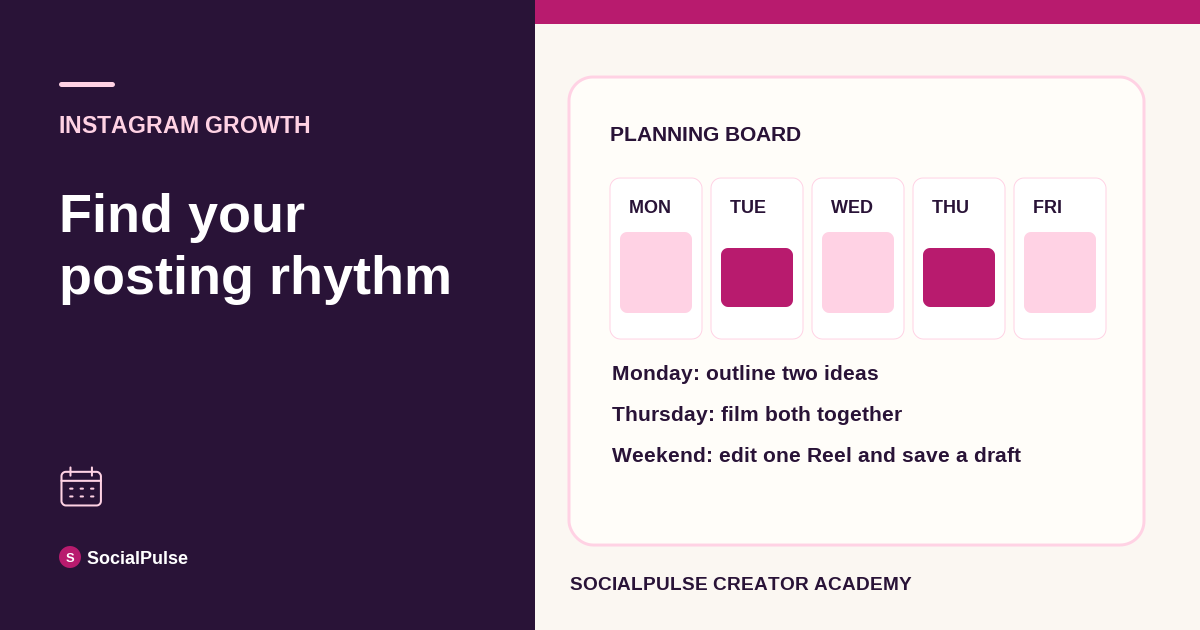
The best schedule is the one that protects the quality of your work and leaves room to respond to people. A calendar that looks ambitious for one week but collapses in month two is not a growth strategy.
Budget time before you promise posts
Time one Reel and one carousel from outline to publishing. Add time for captions and replies. Put those tasks into the actual calendar you have next week, including any commitments you cannot move.
Worked example
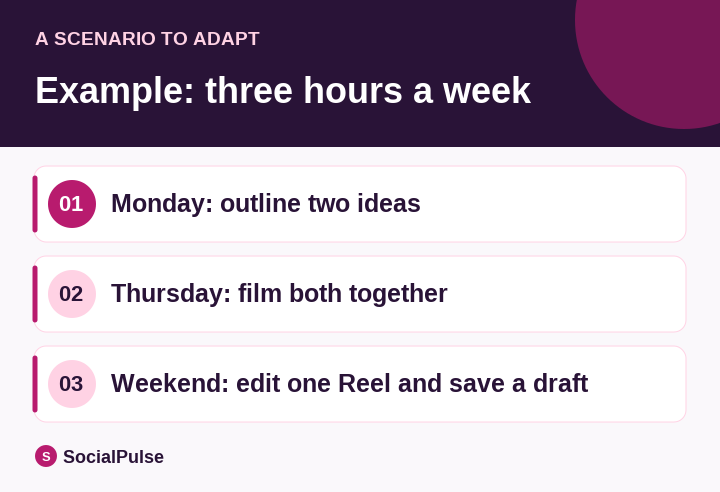
If a Reel takes 95 minutes and a carousel takes 45, a 180-minute week leaves 40 minutes for review and spillover. A second Reel would push the plan over budget by 55 minutes.
What to do with the result
Keep the schedule for two weeks and record time spent. If the same task runs over twice, simplify that step or reduce frequency. A missing draft is a better signal than another arbitrary posting target.
Start with production capacity
List the hours you can honestly give to research, filming, editing, writing, and replies. Then build a schedule around the full workflow, not only the time it takes to press Publish. Batch tasks only when batching saves effort; a highly personal creator may need a looser process.
Create a minimum and a stretch goal
Set a minimum cadence you can meet during a busy week, then a stretch cadence for easier weeks. This keeps the plan from becoming all-or-nothing. Repurpose a strong idea into a follow-up format when it adds a new angle, not simply to fill a slot.
Use audience response to adjust
If a format takes hours but rarely earns the action you want, simplify it or test a different presentation. If a recurring series brings thoughtful replies, give it a predictable place in the schedule. Your own production and audience data should set the pace; generic “post daily” rules cannot know your constraints.
A working guide for your next session
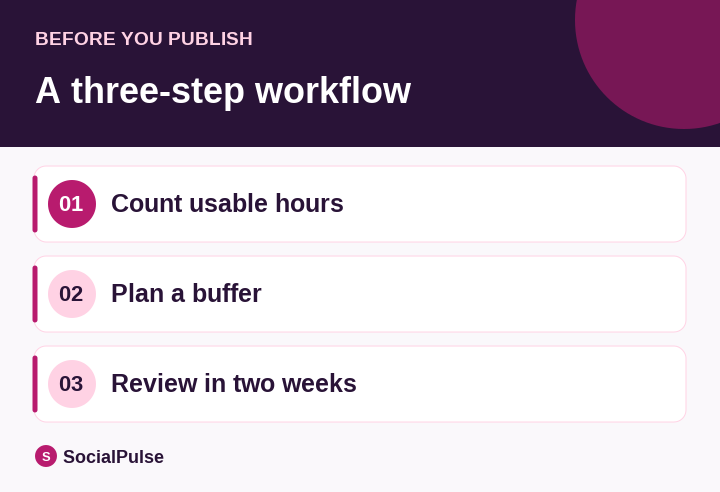
Count the work around publishing
Estimate the time for research, scripting, filming, editing, captions, posting, and replies. Include the setup and cleanup that tend to disappear from a calendar. If a format only works when you have a free afternoon, do not build the whole schedule around it. A realistic estimate helps you choose formats and frequency without turning every busy week into a missed commitment.
Plan a minimum rhythm and a buffer
Set a baseline you can maintain during a demanding week, then leave optional space for timely ideas or extra posts. Prepare a small reserve of evergreen work if that reduces pressure, but do not let batching flatten your voice. Schedule a review date rather than making the calendar permanent. If the baseline is regularly difficult, reduce scope before quality and rest are sacrificed.
Adjust the cadence with production and audience evidence
After a full cycle, compare how each format performed and how much effort it took. A slower cadence can still be useful when posts serve the audience well and make room for thoughtful replies. If frequent posting is sustainable but the subject is drifting, revisit the ideas rather than simply adding more slots. Choose the next rhythm from what you can repeat and what people find useful.