Write a Strong Opening for a Short-Form Video
Give viewers a quick reason to stay by making the opening specific, easy to follow, and consistent with the video’s payoff.
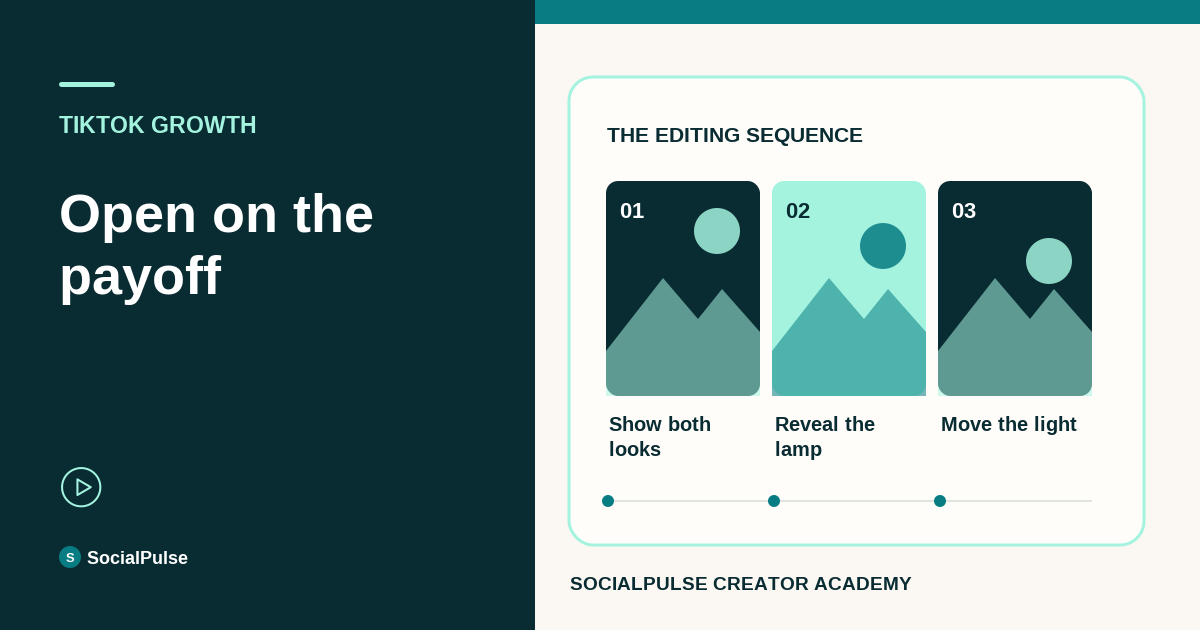
A strong opening is a clear promise, not a loud sentence. Viewers should quickly understand the situation and what the video will help them see, learn, or feel. The rest of the video then needs to deliver on that promise.
Make two cuts of the same first three seconds
Use one project and duplicate the timeline. In Cut A, keep your usual spoken setup. In Cut B, open with visual proof. For a desk lighting tutorial, show the same face under flat room light and under the improved setup. Lock exposure and framing for the comparison. Put a brief label on screen so the first frame works on mute.
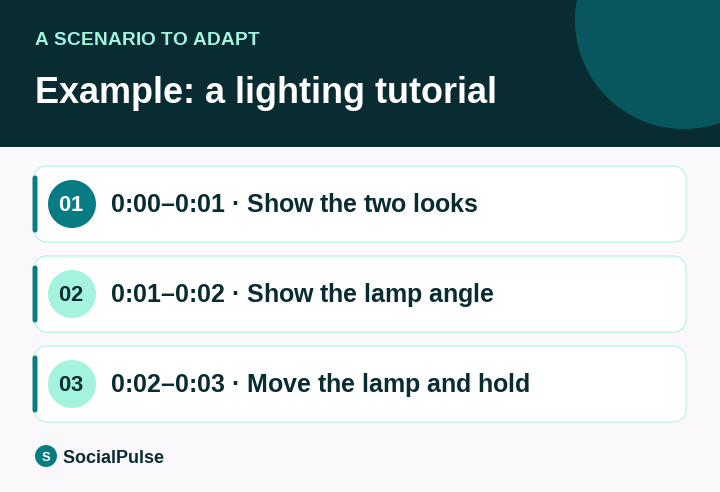
Worked example
Shot list for Cut B: 0:00–0:01, show the finished face beside the original. 0:01–0:02, cut to a wide shot that shows the lamp angle. 0:02–0:03, move the lamp and hold long enough for the lighting change to register. Keep the body of the tutorial and payoff the same. Try both drafts on two viewers and ask them to describe what they expect to learn.
What to do with the result
Publish the version people understand without prompting. If you test openings across separate posts, keep the topic, length, and posting context close and compare equivalent points in each clip where data is available. Call the result directional: two different uploads reach different audiences. If people stay for the reveal but drop before the explanation, cut the explanation earlier on the next edit.
Turn the opening in this guide into three shots for your own video.
Build your three-second shot listStart with the useful detail
Open with the moment of change, the result, or the question the video answers. A cooking clip might begin with the texture the viewer is trying to achieve; a tutorial can show the finished step before explaining it. Remove setup that does not help the audience understand why to stay.
Match the visual to the words
If the opening says “three ways to improve your audio,” show a recording setup or a clear example rather than a generic reaction shot. Spoken words, on-screen text, and visuals should reinforce one idea. This helps people follow even when they watch without sound.
Pay off the hook promptly
Do not withhold the answer just to stretch watch time. If the promise is a practical fix, show it early, then add useful context. A satisfying video respects the viewer’s time and gives them a reason to watch another one.
A working guide for your next session
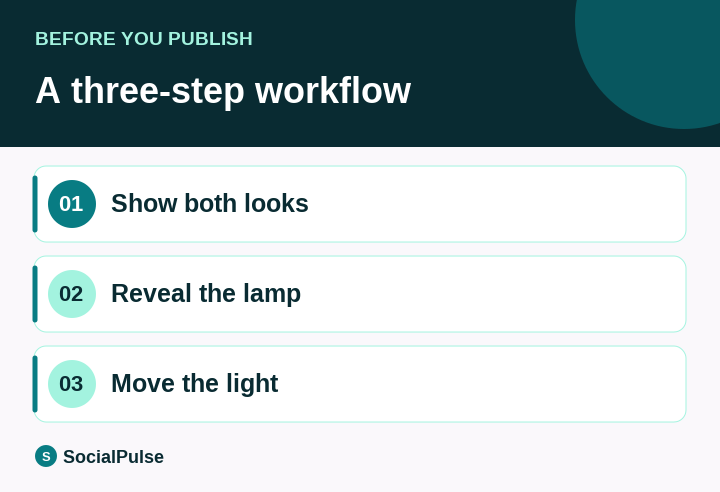
Open on the viewer’s question or the result
A useful first line makes the subject apparent and gives a reason to stay. Show the finished result when seeing it creates curiosity, or state the exact problem when the audience is looking for an answer. Do not start with a broad greeting if it delays the idea. The opening should be understandable even to someone who has never seen your previous videos.
Keep the promise proportional to the video
A dramatic hook can attract attention, but it damages trust if the clip never delivers. Check that the first line is supported by what follows and avoid claims that exaggerate what a tip can do. If the answer is nuanced, signal that honestly and give the most important qualification before the ending. Clarity is a stronger reason to watch than manufactured urgency.
Test delivery, not only wording
Record two openings with the same central idea and watch them at phone size. Check whether the subject, voice, and first visual reinforce one another. Notice where you pause, whether captions fit, and whether the result appears before the explanation needs it. Keep the version that is clearer, then leave the rest of the video unchanged so you can learn from the comparison.